
Listed on 
 Years active
 English
  Dutch - Nederlands
 French - Français
 German - Deutsch
 Greek - Ελληνικά
 Hungarian - Magyar
 Italian - Italiano
 Polish - Polski
 Spanish - Español

Get in touch
- Home
- Getting Started
- Blog
Years activeGet in touch
iFOREX Europe uses cookies to improve your browsing experience, personalize ads, analyze traffic, and ensure security. For more information, please visit our Cookie Policy or go to Manage preferences.
 22/06/2026 - 07:31 UTC
Global financial markets experienced severe geopolitical whiplash as contradictory headlines regarding a potential U.S.-Iran peace deal and the status of the strategic Strait of Hormuz sent major assets careening in opposite directions. The U.S. Dollar Index (USDX) led the market's response, locking in a 1.05% gain over the past week and rebounding during Monday’s Asian session to hover near 100.80. The Greenback's resilience is being fueled by safe-haven demand and renewed skepticism over a long-term U.S.-Iran peace deal, keeping both inflation risks and prolonged high interest rates at the forefront of market concerns. This friction intensified even as Vice President JD Vance engaged in preliminary interim talks with Iranian officials, because President Donald Trump simultaneously threatened direct military strikes on Iran if Hezbollah continues attacking Israel. In response to Trump's warnings, Tehran briefly announced the closure of the Strait of Hormuz, clouding the diplomatic outlook and reinforcing the Federal Reserve's hawkish tone from the previous week; though the central bank kept interest rates steady, nine out of nineteen Fed policymakers now project at least one rate hike this year, with market participants pricing in a potential increase as early as September under the inflation-focused guidance of new Fed Chair Kevin Warsh.
This aggressive macroeconomic environment heavily impacted precious metals, forcing gold down 1.32% over the past week, though it managed to break a three-day losing streak to stabilize near the $4,200 mark during Monday’s European session after touching a one-week low on Friday. While lingering safe-haven demand offered underlying support amid a highly fragile Middle East and intensified Russian attacks on major Ukrainian cities, gold's upward potential remained strictly capped by the robust dollar and aggressive central bank bets. With traders pricing in a nearly 90% chance of a U.S. rate hike this year and Chair Warsh emphasizing strict price stability over growth concerns, the non-yielding asset faced persistent headwinds from these rising interest rate expectations, keeping buyers cautious and limiting any immediate recovery.
Meanwhile, the energy sector bore the brunt of the volatility as crude oil suffered a massive 9.21% weekly plunge, with West Texas Intermediate (WTI) futures facing intense selling pressure on Monday to plummet over 4% and trade near $79.50. This steep sell-off followed a surprise announcement by President Trump regarding a Memorandum of Understanding with Iran, set to be signed in Switzerland, in which he authorized the toll-free opening of the strategic Strait of Hormuz—a vital passage for nearly 20% of the world's energy supply—alongside the immediate removal of the U.S. Naval blockade. Although Iranian state media indicated that the actual reopening and lifting of restrictions would take up to thirty days to implement under local arrangements, the diplomatic breakthrough fundamentally shifted market sentiment.
An artificial intelligence investment wave swept across Asian stock markets on Monday, lifting regional equities as tech giants and chipmakers surged on powerful demand. Investor confidence was further bolstered by reports of diplomatic progress following U.S.-Iran peace talks in Switzerland, which helped steady global futures and ease recent geopolitical anxieties. However, broader gains were partially capped by macroeconomic headwinds, as traders balanced this optimism against a strengthening dollar and expectations of prolonged high U.S. interest rates.
This AI enthusiasm propelled Japanese and South Korean equities toward historic highs. Japanese tech names rallied on news of a massive government investment target for physical AI infrastructure by 2040, alongside a weak yen. Meanwhile, South Korean markets advanced ahead of domestic trade data, highlighted by a dramatic shift in market leadership as AI chip specialist SK Hynix overtook Samsung Electronics to become the country's most valuable company.
Other regional markets saw a more mixed performance. While mainland Chinese equities notched modest gains on hopes of further Beijing policy support, Hong Kong's index underperformed, dragged down by electric vehicle makers facing potential new EU restrictions. Similarly, Australian shares edged lower as investors exercised caution ahead of pivotal local inflation and employment data.
Looking ahead, market participants will pivot toward critical macroeconomic data and high-profile corporate earnings to evaluate the sustainability of Thursday's upward momentum. On the economic front, investors will closely scrutinize the final Q1 Gross Domestic Product (GDP) reading and the Core Personal Consumption Expenditures (PCE) Price Index—the Federal Reserve's preferred inflation gauge—to project future monetary policy under Chair Kevin Warsh. This macroeconomic data will drop alongside a packed earnings calendar, kicking off Tuesday with results from industry bellwethers FedEx and Carnival Corporation, followed by a highly anticipated report from chipmaker Micron Technology on Wednesday.
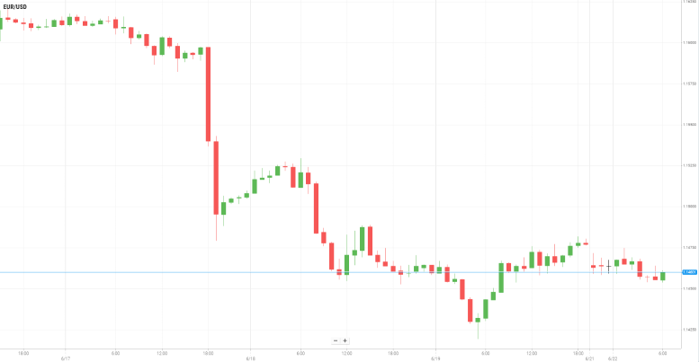
EUR/USD declines toward 1.1465 during Monday’s early European trading session as bearish momentum continues to dominate the pair.
The EUR/USD pair continues to weaken as uncertainty surrounding a potential US-Iran peace agreement weighs on market sentiment. Comments from US President Donald Trump regarding the possibility of renewed conflict in the Middle East have increased risk aversion, putting pressure on risk-sensitive assets such as the Euro and supporting demand for the US Dollar.
Meanwhile, diplomatic efforts have shown some signs of progress. Qatar and Pakistan announced that negotiations between the US and Iran in Bürgenstock, Switzerland, took place in a positive and constructive atmosphere. The mediators highlighted progress toward easing regional tensions, including agreements related to oil and petrochemical exports, the removal of restrictions, the release of certain frozen assets, and the launch of a major reconstruction and development initiative for Iran.
Despite the broader risk-off environment, hawkish comments from European Central Bank officials could help limit further losses for the Euro. ECB policymaker and Belgian central bank Governor Pierre Wunsch said the central bank may raise interest rates again as soon as next month if there is further evidence that inflation in the Eurozone is spreading beyond energy-related factors.
The ECB’s deposit rate currently stands at 2.25%, and financial markets are expecting additional 25-basis-point rate increases in September or October, with the possibility of another hike in the early months of next year.
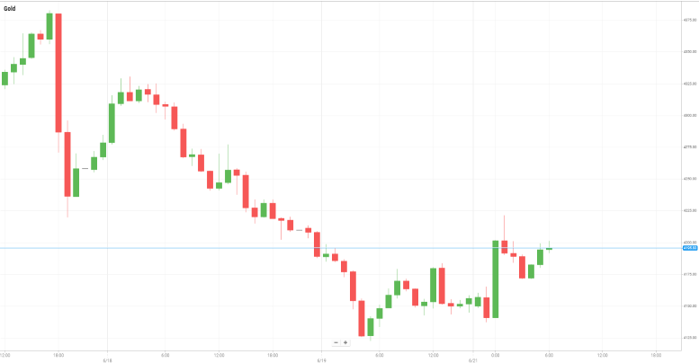
Gold retreated slightly from its intraday advance above the $4,200 level but maintains a positive tone, marking its first gain after three consecutive sessions of losses. The precious metal continues to receive some support as easing concerns over inflation and interest rates weigh on crude oil prices, reducing fears of renewed price pressures.
The decline in crude oil prices follows a modest weekly opening gap higher after mediators Qatar and Pakistan announced a formal 60-day framework aimed at reaching a final US-Iran peace agreement. The development has helped ease inflation concerns and expectations of tighter monetary policy, providing some support for the non-yielding precious metal.
Despite this, expectations of further Federal Reserve tightening continue to limit Gold’s upside potential. Markets are pricing in a high probability that the Fed could raise interest rates again before the end of the year after last week’s hawkish guidance indicated that policymakers may need to maintain a restrictive stance if inflation remains persistent. Newly appointed Fed Chair Kevin Warsh also emphasized the importance of price stability during the post-meeting press conference, suggesting that the central bank may not move quickly toward rate cuts even amid slowing economic growth.
Meanwhile, ongoing geopolitical uncertainty continues to support the US Dollar and restrict gains in Gold. Iran has accused the US and Israel of violating the ceasefire and announced the closure of the Strait of Hormuz following continued Israeli strikes in Lebanon.
Looking ahead, traders will closely monitor developments surrounding US-Iran relations, which are likely to drive volatility across financial markets. Comments from key Federal Reserve officials will also influence USD demand and provide direction for the precious metal.
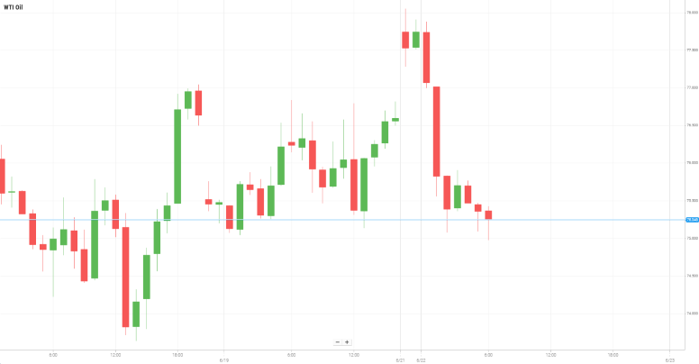
Oil prices turned lower on Monday after early gains faded as Iran reported significant progress in peace negotiations with the United States in Switzerland. However, concerns over renewed military tensions remain after US President Donald Trump warned of possible further action against Iran over Hezbollah attacks on Israel, keeping uncertainty elevated in energy markets.
Both benchmarks had declined sharply the previous week, losing nearly 10% as optimism grew that an interim peace agreement could ease tensions in the Middle East and improve the outlook for global oil supplies.
Iranian Foreign Minister Abbas Aragchi said that major progress had been achieved during four-party discussions held in Switzerland. Meanwhile, Qatar’s foreign ministry confirmed that technical negotiations would continue at the Bürgenstock resort, with discussions focused on maintaining the ceasefire framework, improving maritime security, and establishing a communication channel to support the safe movement of commercial vessels through the strategically important Strait of Hormuz.
The talks followed a 60-day interim peace agreement mediated by Qatar and Pakistan, bringing together US and Iranian officials to address issues including sanctions relief, regional security, and future negotiations related to Iran’s nuclear programme.
Despite signs of diplomatic progress, tensions remain fragile. Iran recently announced the closure of the Strait of Hormuz, citing continued Israeli military operations in Lebanon and alleged violations of commitments under the interim agreement.
Markets will continue to monitor developments from the US-Iran negotiations in the coming days, as the outcome of the diplomatic process is likely to determine the next major move for crude oil prices.
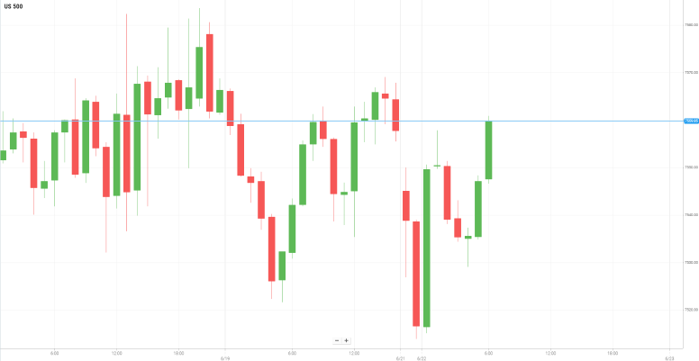
US stock index futures pared early losses on Sunday evening after Iran indicated that progress had been made during weekend peace negotiations with the United States in Switzerland. The initial decline in futures markets came as investors reacted to renewed concerns over Middle East tensions following US President Donald Trump’s warning of possible additional military action against Iran despite ongoing diplomatic efforts.
The rebound followed comments from Iranian officials and mediators suggesting that negotiations had moved forward, helping ease some concerns about an escalation in regional conflict.
The conflicting signals surrounding the negotiations have highlighted the fragile nature of the current ceasefire framework and raised questions over whether a broader peace agreement can be achieved. The two sides are expected to continue discussions over the next 60 days, including talks related to Iran’s nuclear programme and regional security.
Meanwhile, Wall Street enters the week with positive momentum following strong gains in technology stocks. US equities ended Thursday’s session higher, supported by continued optimism surrounding artificial intelligence and semiconductor companies
Investors will now focus on upcoming US economic data, including purchasing managers’ index figures, revised first-quarter GDP data, and the May Personal Consumption Expenditures (PCE) price index. The PCE report, which is the Federal Reserve’s preferred inflation measure, will be closely monitored for signals about the future path of interest rates.
The materials contained on this document should not in any way be construed, either explicitly or implicitly, directly or indirectly, as investment advice, recommendation or suggestion of an investment strategy with respect to a financial instrument, in any manner whatsoever. Any indication of past performance or simulated past performance included in this document is not a reliable indicator of future results. For the full disclaimer click here.
 Trusted partner
 Featured partner
 By
By 


