
Listed on 
 Years active
 English
  Dutch - Nederlands
 French - Français
 German - Deutsch
 Greek - Ελληνικά
 Hungarian - Magyar
 Italian - Italiano
 Polish - Polski
 Spanish - Español

Get in touch
- Home
- Getting Started
- Blog
Years activeGet in touch
iFOREX Europe uses cookies to improve your browsing experience, personalize ads, analyze traffic, and ensure security. For more information, please visit our Cookie Policy or go to Manage preferences.
 15/06/2026 - 07:37 UTC
The US Dollar Index (USDX) drifted lower last week, sliding 0.55% to trade around the 99.50 level as safe-haven demand for the Greenback rapidly evaporated following a major US-Iran peace framework. The agreement, which includes lifting the US naval blockade on Iranian ports, significantly altered global interest rate expectations by softening the outlook for aggressive monetary tightening. With the CME FedWatch tool showing a noticeable drop in the implied probability of a December Federal Reserve interest rate hike, the fading premium of the dollar left the currency facing steady downward pressure throughout the week.
Gold similarly lost its upward momentum as the breakthrough eased global inflation fears, finishing the week down 2.48%. Despite a brief intraday rebound to a weekly high driven by localized technical buying, the precious metal's broader negative outlook remained firmly intact. Because gold is traditionally utilized as a non-yielding safe haven against geopolitical instability, the announcement that Washington and Tehran had agreed to end their conflict stripped away its risk premium, prompting investors to quickly rotate out of the asset.
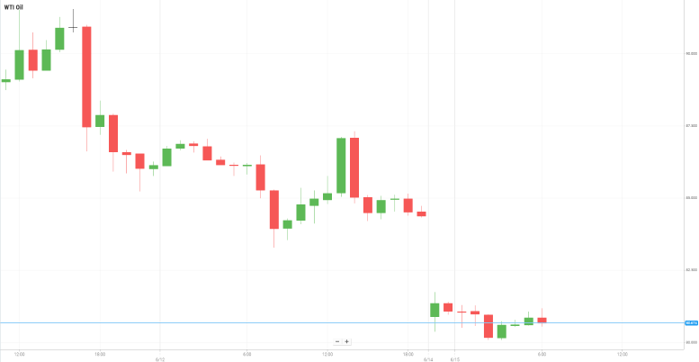
West Texas Intermediate (WTI) crude oil experienced the most intense selling pressure, plummeting 6.58% to trade near $79.50 as the peace deal signaled the reopening of the critical Strait of Hormuz. While Iran noted that the reopening of this vital chokepoint—which handles nearly 20% of the world's energy supply—would take up to 30 days under its own arrangements, the immediate relief from cooling geopolitical friction drove a massive liquidation in oil futures. This sharp sell-off occurred despite warnings from market analysts that damaged Middle Eastern energy infrastructure could still cap long-term supply and limit deeper downfalls.
Asian markets experienced a broad rally on Monday as investors welcomed a preliminary peace agreement between the United States and Iran. Japanese shares led the upward momentum, reaching historic highs just ahead of the Bank of Japan's policy meeting later in the week. Regional sentiment was further lifted by a strong Friday close on Wall Street, which was driven by a stellar market debut from SpaceX, keeping U.S. equity futures firmly in positive territory during Asian trading hours.
The surge across regional indexes was fueled by the memorandum of understanding to halt the U.S.-Iran conflict and reopen the critical Strait of Hormuz, with an official signing expected by Friday. South Korea's KOSPI paced the gains, pushing back toward its own historic peak, while bourses in China, Hong Kong, Singapore, Australia, and India all posted solid advances. The prospect of an immediate de-escalation in the Middle East also provided significant relief to major Asian economies like India, Japan, and South Korea that rely heavily on energy imports.
As the week progresses, market focus will shift squarely toward a packed schedule of central bank decisions and high-profile corporate earnings. Beyond the interest rate verdicts from Australia and Japan, investors will closely monitor key macroeconomic data, including the UK CPI inflation report and the Bank of England's monetary policy summary and rate vote. The centerpiece of the week's policy action arrives with the Federal Reserve's upcoming meeting, where market participants will scrutinize the FOMC statement, economic projections, and press conference for definitive clues on the trajectory of global borrowing costs. Alongside these crucial monetary updates, Thursday, June 18, 2026, will turn the spotlight to corporate health as major earnings releases from Accenture and Kroger cross the wire, providing Wall Street with a dual test of macroeconomic policy and corporate resilience.
The EUR/USD pair gained momentum during early European trading on Monday, climbing toward 1.1610 as improving market sentiment following reports of a US–Iran peace framework boosted demand for the Euro against the US Dollar.
The United States and Iran have reportedly reached a framework agreement aimed at easing tensions, with the deal expected to be signed in Switzerland on Friday. US President Donald Trump stated that the US would lift its naval blockade on Iranian ports and that the Strait of Hormuz would reopen once the agreement is finalized. The development has reduced geopolitical concerns and provided support for risk-sensitive assets, including the Euro.
Market focus now shifts to the Federal Reserve’s interest rate decision on Wednesday. The central bank is widely expected to keep its benchmark interest rate unchanged at a target range of 3.50% to 3.75%. Traders will closely watch the press conference for signals on the future direction of US monetary policy, particularly under new Fed Chair Kevin Warsh. A more hawkish stance from Fed officials could strengthen the US Dollar and limit further upside in the EUR/USD pair.
Meanwhile, the European Central Bank recently raised interest rates, pointing to inflation risks stemming from the conflict in the Middle East. The move represented the ECB’s first rate increase since September 2023 after seven consecutive policy meetings in which rates were left unchanged.
With geopolitical risks easing and central bank policy remaining in focus, EUR/USD traders will continue to monitor developments from both the Federal Reserve and the European Central Bank for fresh direction.
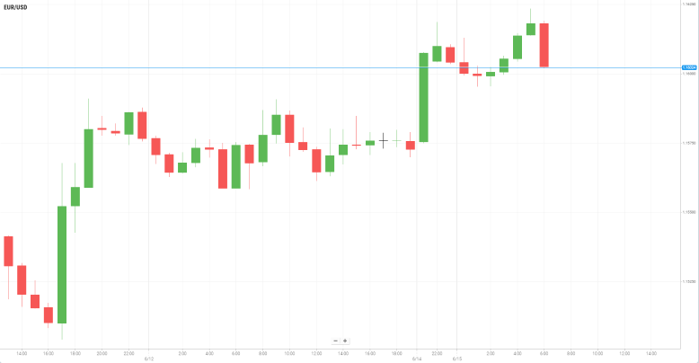
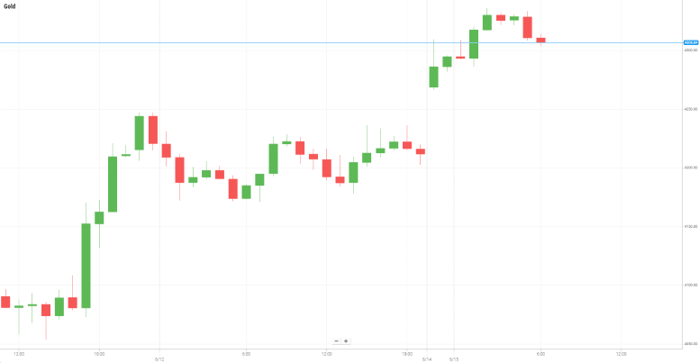
Gold prices moved higher during early European trading on Monday, reaching a weekly high as the precious metal attracted fresh buying interest following news that the United States and Iran had agreed on a framework aimed at ending their conflict.
The reported peace agreement has eased concerns over rising inflation and prolonged geopolitical tensions, supporting demand for gold. Washington and Tehran said the agreement would take effect on Friday, with US President Donald Trump confirming that the US would lift its naval blockade on Iranian ports and that the Strait of Hormuz would reopen once the deal is signed.
Trump also said the agreement would ensure that the Strait of Hormuz becomes “permanently toll free.” Meanwhile, the United Kingdom, France, Germany, and Italy indicated they were prepared to ease sanctions on Iran in response to progress regarding its nuclear program following the US–Iran agreement. Expectations of a broader diplomatic resolution have provided some support for the precious metal.
Any renewed escalation in Middle East tensions could push crude oil prices higher, increasing inflation concerns and raising expectations that interest rates may remain elevated for longer. While gold is traditionally viewed as a safe-haven asset during periods of geopolitical uncertainty, it does not provide interest income, making it less attractive when borrowing costs are high.
Following the peace agreement, markets have reduced expectations for a Federal Reserve rate hike in December.
Oil prices dropped sharply on Monday, falling to their lowest levels since March, after the United States and Iran announced an initial agreement aimed at ending their conflict and restoring traffic through the Strait of Hormuz, a key global energy route.
The United States and Iran are expected to sign a memorandum of understanding in Switzerland on Friday, according to Pakistan’s prime minister, who helped mediate the discussions. US President Donald Trump said the Strait of Hormuz would reopen without restrictions and that the US naval blockade on Iranian ports would be lifted once the agreement is finalized.
The development has reduced the geopolitical risk premium that had supported oil prices, with traders now pricing in the possibility of supply flows gradually returning to normal.
The Strait of Hormuz is one of the world’s most important energy chokepoints, with around one-fifth of global oil and liquefied natural gas supplies passing through the region. The prolonged conflict had disrupted millions of barrels of oil and gas supply, raising concerns over tighter markets and higher energy costs.
However, uncertainty remains over how quickly Middle Eastern producers can restore production and exports after infrastructure damage caused by the conflict. Analysts noted that oil flows through the Strait of Hormuz may only need to recover to around 60%–70% of pre-war levels for markets to return to expectations of oversupply conditions.
Market participants are now shifting their focus from the immediate price reaction to the pace of supply normalization and whether both sides will fully comply with the agreement. While the conflict may have ended, the impact of months of elevated energy prices and damage to oil infrastructure is expected to take time to reverse.
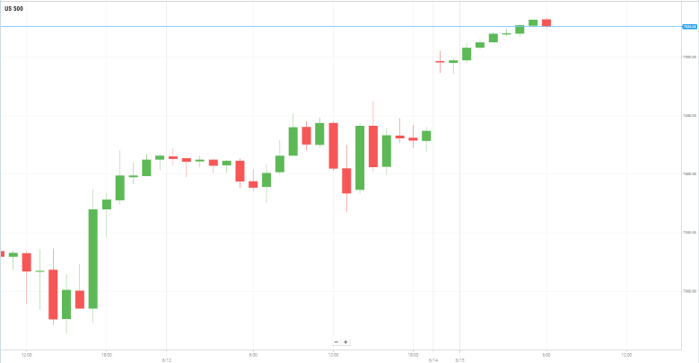
US stock index futures moved sharply higher on Monday after Washington and Tehran confirmed that they had reached a peace agreement aimed at ending their conflict and reopening key shipping routes in the Middle East.
Investors welcomed the development as a reduction in geopolitical risks is expected to ease pressure on energy markets and support global economic conditions. Market attention now turns to the Federal Reserve’s policy meeting this week, where the central bank is widely expected to keep interest rates unchanged.
The gains followed a positive session on Friday, when US stocks closed higher amid growing optimism over a potential US–Iran agreement. Technology stocks also received a boost after SpaceX surged during its market debut, adding further momentum to investor sentiment.
Wall Street ended last week on a stronger note, with the US 500 rising 0.5% for the week. SpaceX shares jumped more than 19% during their trading debut, closing with a market capitalization of approximately $2 trillion after raising $75 billion in the largest initial public offering in US history.
The Federal Reserve meeting remains the key event for markets this week. The meeting will mark the first policy decision under new Fed Chair Kevin Warsh, with investors looking for guidance on the future path of interest rates.
Recent inflation pressures driven by higher energy costs, combined with continued strength in the labor market, have reinforced expectations that the Fed will maintain its current policy stance for longer.
The materials contained on this document should not in any way be construed, either explicitly or implicitly, directly or indirectly, as investment advice, recommendation or suggestion of an investment strategy with respect to a financial instrument, in any manner whatsoever. Any indication of past performance or simulated past performance included in this document is not a reliable indicator of future results. For the full disclaimer click here.
 Trusted partner
 Featured partner
 By
By 


