
Listed on 
 Years active
 English
  Dutch - Nederlands
 French - Français
 German - Deutsch
 Greek - Ελληνικά
 Hungarian - Magyar
 Italian - Italiano
 Polish - Polski
 Spanish - Español

Get in touch
- Home
- Getting Started
- Blog
Years activeGet in touch
iFOREX Europe uses cookies to improve your browsing experience, personalize ads, analyze traffic, and ensure security. For more information, please visit our Cookie Policy or go to Manage preferences.
 26/06/2026 - 07:00 UTC
The US Dollar Index (USDX) rebounded to trade around 101.50 on Friday, capitalizing on heightened market expectations for a Federal Reserve rate hike later this year. This hawkish momentum followed Thursday's data release showing the headline PCE Price Index accelerated to 4.1% YoY in May, while the core gauge ticked up to 3.4% marking its highest annual reading since October 2023. Although the Greenback suffered a brief pullback on Thursday dropping 0.10% partly due to market profit-taking as investors hoped inflation was nearing its peak, hawkish rhetoric from Fed officials and an 80% market probability of at least one more rate hike this year firmly stalled the currency's retreat.
Gold (XAU/USD) experienced downward pressure, trading just above the $4,000 psychological threshold and heading toward its fourth consecutive weekly loss. The precious metal initially pared some of its Asian session losses on Friday after a suspected projectile attack by Iran’s Islamic Revolutionary Guard Corps on a cargo ship in the Strait of Hormuz revived safe-haven interest. However, because Thursday's broader market action heavily favored the US Dollar following the hot PCE inflation data, the non-yielding bullion struggled to sustain upward momentum—managing only a minor 0.05% gain on Thursday—against a backdrop of elevated global borrowing costs and a strengthening Greenback.
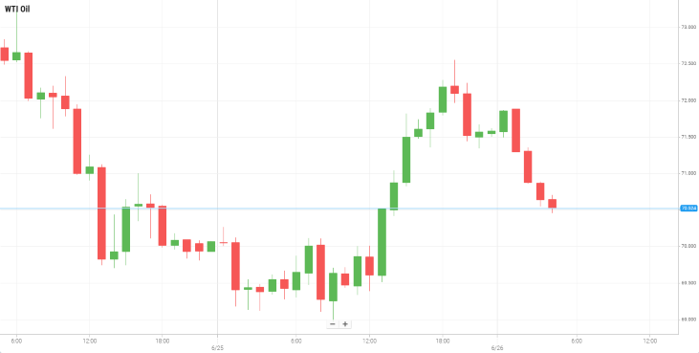
WTI Crude Oil slipped below $70.50 per barrel on Friday, reversing course after registering a sharp 2.16% gain during Thursday’s trading session. Oil prices had initially spiked on Thursday following the geopolitical anxieties sparked by the tanker attack near the Strait of Hormuz and the Gulf of Oman. However, the market quickly gave back those gains on Friday as the reality of surging Middle Eastern supply overshadowed the conflict; QatarEnergy issued its first major crude tender for July-August loading since the US-Iran friction began, joining recent heavy supply tenders from Iraq and Kuwait to keep global markets well-stocked.
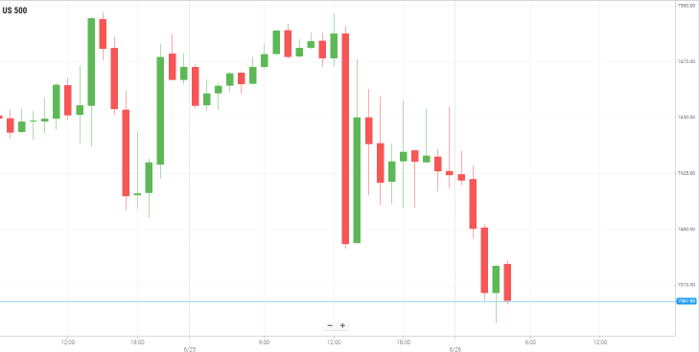
Asian stock markets faced a significant downturn on Friday, driven by a sharp tech sector reversal as investors locked in profits following a massive global artificial intelligence rally. Slower momentum on Wall Street spilled over into the Asian session after Apple Inc. triggered valuation concerns by hiking hardware prices to counter soaring chip manufacturing costs. This pricing shift overshadowed stellar earnings from Micron Technology, reviving broader anxieties regarding the high costs of building AI infrastructure and its impact on consumer tech demand.
The tech retreat hit major East Asian indices hardest, as benchmarks in South Korea and Japan plunged between 4% and 7%. Market heavyweights Samsung Electronics and SK Hynix both fell heavily after local reports highlighted immense long-term capital expenditure plans for semiconductor capacity. Sentiment in Tokyo was further dampened by tech conglomerate SoftBank Corp. plummeting on reports that OpenAI might postpone its highly anticipated initial public offering until 2027, while fresh Tokyo inflation data reinforced expectations of upcoming interest rate hikes from the Bank of Japan. The selloff cascaded across the wider region, dragging major indices in China and Hong Kong down by roughly 2% to 3%.
As the market heads into July, investors face a highly volatile stretch defined by corporate earnings from giants like Nike and Constellation Brands, followed by a barrage of high-stakes macroeconomic data. Key policy speeches from BoE Governor Bailey and Fed Chairman Warsh will set the tone mid-week, culminating in Thursday's crucial Non-Farm Payrolls report and ISM Manufacturing PMI. Ultimately, whether these data points confirm sticky inflation or a cooling labor market, the upcoming week promises to heavily dictate the Federal Reserve's interest rate trajectory and steer global market sentiment.
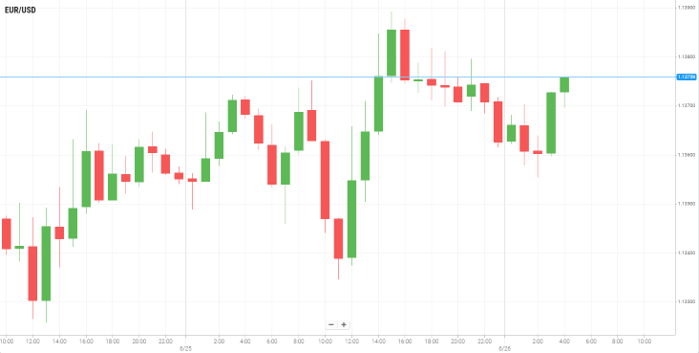
The EUR/USD pair hovered around 1.1365 during the early Asian session on Friday, remaining close to a 13-month low as growing expectations of further US interest rate hikes continue to support the US Dollar. Market participants now turn their attention to the University of Michigan Consumer Sentiment Index, due later on Friday.
US inflation accelerated further in May, reinforcing the case for tighter monetary policy. The headline Personal Consumption Expenditures (PCE) Price Index, the Federal Reserve's preferred inflation gauge, rose 4.1% year-over-year, up from 3.3% in April. The reading marked the first time headline PCE inflation has exceeded 4.0% in three years, largely driven by higher energy prices amid escalating tensions in the Middle East. The stronger-than-expected inflation data has kept the prospect of another Fed rate hike this year firmly in play.
Meanwhile, core PCE inflation, which excludes volatile food and energy prices, increased 3.4% annually in May from 3.3% previously. The latest reading was the highest since October 2023, underscoring persistent underlying price pressures.
According to the CME FedWatch Tool, financial markets are pricing in a roughly 63.4% probability that the Federal Reserve will raise interest rates at its September 15–16 policy meeting.
On the European side, dovish comments from European Central Bank (ECB) officials continue to weigh on the Euro. Although the ECB raised its deposit rate by 25 basis points to 2.25% at its June policy meeting, ECB President Christine Lagarde said on Monday that policymakers do not need to react aggressively to the economic spillovers from the Middle East conflict. Lagarde added that while the inflation shock facing the Eurozone is significant, it is not yet severe enough to trigger a sustained rise in longer-term inflation expectations.
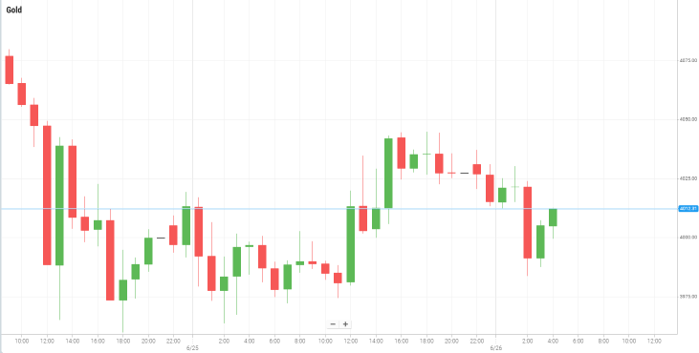
Gold comes under renewed selling pressure during the Asian session on Friday, giving back part of the previous day's recovery as fresh buying interest in the US Dollar (USD) weighs on the precious metal. Growing concerns over geopolitical tensions in the Strait of Hormuz have revived demand for the Greenback's safe-haven appeal, while expectations that the Federal Reserve (Fed) could still raise interest rates later this year continue to underpin the USD and pressure non-yielding assets such as Gold.
Data released on Thursday by the US Bureau of Economic Analysis (BEA) showed that the headline Personal Consumption Expenditures (PCE) Price Index accelerated to 4.1% year-over-year in May from 3.8% previously. Meanwhile, the core PCE Price Index, which excludes food and energy, rose 3.4% annually. Although the stronger inflation readings reinforced concerns over persistent price pressures, investors viewed inflation as potentially nearing its peak following the recent decline in crude oil prices to pre-conflict levels after the preliminary US-Iran peace agreement.
Meanwhile, reports that Iran's Islamic Revolutionary Guard Corps (IRGC) attacked a Singapore-flagged cargo vessel in the Strait of Hormuz have renewed concerns over the durability of the fragile US-Iran ceasefire. The escalation has boosted demand for traditional safe-haven assets, with the US Dollar benefiting more than Gold as higher US interest rate expectations continue to support the currency.
As a result, Gold has slipped back below the key $4,000 psychological level and remains on track to post a fourth consecutive weekly decline.
Oil prices slipped in early Asian trading on Friday and remained on track for steep weekly declines as easing concerns over supply disruptions outweighed renewed geopolitical tensions in the Middle East. Although a cargo vessel was struck near the Strait of Hormuz on Thursday, the resumption of tanker traffic through the key shipping lane has helped ease fears of prolonged supply interruptions.
Both benchmarks had rallied more than 2% on Thursday after a cargo ship was hit by an unidentified projectile near Oman, prompting the United Nations' shipping agency to suspend its voluntary evacuation program for vessels operating in the area.
According to two US officials cited by Reuters, Iran fired at the Singapore-flagged cargo vessel as it attempted to transit the Strait of Hormuz. Iranian authorities later warned that they could not guarantee the safety of ships navigating outside the designated Hormuz shipping routes, renewing concerns about the security of one of the world's most important energy corridors.
Shipping data released on Thursday showed that crude tanker movements through the Strait of Hormuz climbed to their highest level since the outbreak of the US-Israel conflict with Iran in February, following the ceasefire agreement that allowed the waterway to reopen. Nevertheless, overall traffic remains well below the average of around 125 vessels per day recorded before the conflict erupted on February 28, highlighting that shipping activity has yet to fully recover.
Elsewhere, earthquakes in Venezuela have also introduced fresh supply uncertainties. Initial assessments indicate that the country's major oil fields, refineries, export terminals, and pipeline infrastructure sustained only limited damage, as most production facilities are located far from the areas most affected by the earthquakes.
US equities closed mixed on Thursday after a volatile trading session, as a sharp decline in Apple shares overshadowed strong gains in semiconductor stocks following upbeat earnings from Micron Technology. Meanwhile, the US Dollar and Treasury yields edged lower after inflation data largely matched market expectations.
Market sentiment was driven by contrasting developments within the technology sector. Investors initially welcomed stronger-than-expected quarterly earnings and forward guidance from Micron Technology, but optimism faded after Apple announced significant price increases across several product lines, raising concerns about the broader impact of rising component costs.
Micron shares surged nearly 16% after the memory-chip manufacturer delivered better-than-expected earnings and projected robust demand driven by artificial intelligence applications and hyperscale data centers.
Away from corporate earnings, investors closely monitored fresh US economic data. The Core Personal Consumption Expenditures (PCE) Price Index—the Federal Reserve's preferred inflation gauge—rose 0.3% month-over-month and 3.4% annually in May, in line with market expectations and slightly above April's reading. Headline PCE inflation increased 0.4% on the month and 4.1% year-over-year, remaining well above the Fed's 2% inflation target.
Geopolitical developments also remained in focus after a cargo vessel was struck by an unidentified projectile near the Strait of Hormuz.
Overall, investors remain caught between resilient corporate earnings, persistent inflation pressures, evolving Federal Reserve expectations, and ongoing geopolitical risks. While AI-related optimism continues to support semiconductor stocks, broader market sentiment remains cautious as higher interest rates and global uncertainty weigh on risk appetite.
The materials contained on this document should not in any way be construed, either explicitly or implicitly, directly or indirectly, as investment advice, recommendation or suggestion of an investment strategy with respect to a financial instrument, in any manner whatsoever. Any indication of past performance or simulated past performance included in this document is not a reliable indicator of future results. For the full disclaimer click here.
 Trusted partner
 Featured partner
 By
By 


