
Listed on 
 Years active
 English
  Dutch - Nederlands
 French - Français
 German - Deutsch
 Greek - Ελληνικά
 Hungarian - Magyar
 Italian - Italiano
 Polish - Polski
 Spanish - Español

Get in touch
- Home
- Getting Started
- Blog
Years activeGet in touch
iFOREX Europe uses cookies to improve your browsing experience, personalize ads, analyze traffic, and ensure security. For more information, please visit our Cookie Policy or go to Manage preferences.
 12/05/2026 - 07:07 UTC
The USDX edged down -0.07% on Monday, though it began gaining ground early Tuesday as deteriorating peace optimism in the Middle East drove a flight to safety. The Greenback is strengthening as investors pivot toward safe-haven assets following reports that U.S. President Donald Trump has expressed growing frustration over the stalemate in negotiations. With the administration reportedly considering a resumption of military action and Iranian officials warning of full readiness to retaliate, the fragile regional ceasefire is under immense strain, bolstering the U.S. Dollar's reserve currency status.
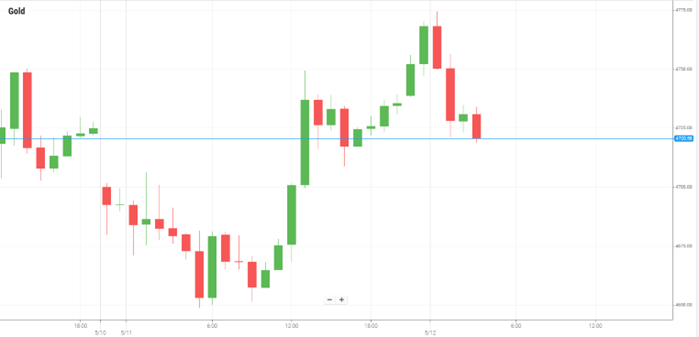
Gold rose 1.61% on Monday and touched a three-week high during Tuesday's Asian session before experiencing an intraday retracement toward the $4,700 mark. While persistent geopolitical instability continues to provide a tailwind for the bullion, further gains are being capped by a modest uptick in the U.S. Dollar and hawkish Federal Reserve bets. Traders are currently hesitant to place aggressive directional bets as they weigh the impact of war-driven energy prices on global inflation ahead of key U.S. economic data.
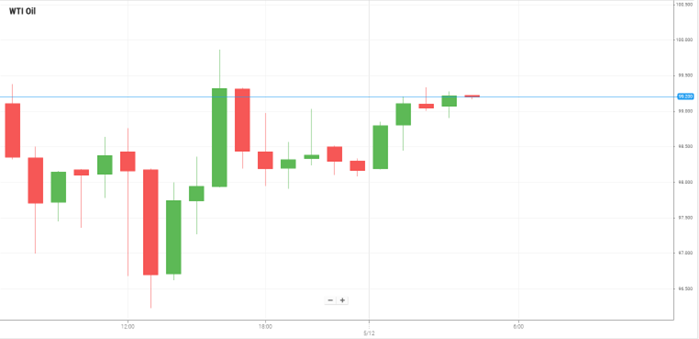
WTI Oil declined -0.78% on Monday but extended gains for a second successive day on Tuesday, trading near $95.80 as supply concerns prevail. Crude prices are surging after President Trump formally rejected Tehran's latest peace proposal, describing the current ceasefire as being on "massive life support". This diplomatic breakdown, coupled with reports that OPEC output plunged to its lowest level in over two decades in April, has intensified fears that the Strait of Hormuz will remain effectively closed, potentially delaying a return to market stability until 2027.
Most regional indices were mixed on Tuesday as the recent technology rally appeared to lose momentum. Market sentiment remains cautious due to a lack of clear progress in peace negotiations and reports that the U.S. may be considering further military options. In this climate, the China SSE and China SZSE indices remained largely flat as investors focused on the high-stakes summit between the U.S. and Chinese presidents scheduled for later this week to discuss trade and regional security. Meanwhile, the Hong Kong 50 showed a slight downward trend amid the broader uncertainty.
Japanese markets showed resilience, with the Nikkei 225 and TOPIX edging higher during the session. Investors largely overlooked signs of a growing hawkish tilt from the central bank, opting instead to focus on regional stability and the upcoming diplomatic meetings. This stability contrasted with the performance of the main US equity indices, which finished at record highs in the previous session but saw gains tempered by persistent geopolitical concerns.
Within the technology sector, Samsung Electronics declined -1.22% and SK Hynix fell -0.28% early on Tuesday as investors engaged in profit-taking following a series of recent record highs. Market focus is also intensified on labor negotiations at Samsung ahead of a potential strike that could disrupt global memory chip production.
For the remainder of the week, global markets will remain fixated on the U.S. Consumer Price Index (CPI) and Producer Price Index (PPI) reports to gauge the war's impact on inflationary pressures and Federal Reserve policy. Simultaneously, investors are closely monitoring President Trump’s high-stakes meeting with Chinese President Xi Jinping, which is expected to center on global energy security and artificial intelligence.
On the corporate front, chip stocks gained ground on Monday, lifting the broader market behind strong performances from Qualcomm and Micron Technology. This week’s earnings slate is headlined by Chinese e-commerce giant Alibaba and Dow 30 component Cisco. Furthermore, investors will closely monitor financial results from Constellation Energy to evaluate corporate health and stability within the energy sector.
The Euro edged lower against the US Dollar in early Asian trading on Tuesday, with EUR/USD slipping toward the 1.1775 level as investors remained cautious ahead of the upcoming US inflation data and renewed geopolitical uncertainty in the Middle East.
Market sentiment weakened after fresh comments from both Iranian and US officials raised concerns over the durability of the fragile ceasefire between Washington and Tehran. According to Reuters, Iranian Parliament Speaker Mohammad Bagher Ghalibaf stated that Iran’s armed forces are prepared to respond to any future aggression following escalating regional tensions.
Meanwhile, US President Donald Trump described the ceasefire as being on “massive life support” after rejecting Iran’s latest peace proposal, calling it “unacceptable.”
Despite the downside pressure, expectations of further monetary tightening from the European Central Bank (ECB) may help limit losses for the single currency. ECB Governing Council member Martin Kocher said there is little reason to postpone additional interest rate increases if energy prices fail to ease in the near term.
Investors are now largely expecting the ECB to raise rates by 25 basis points at its June meeting, with markets pricing in a strong probability of further tightening through the end of 2026, according to Reuters.
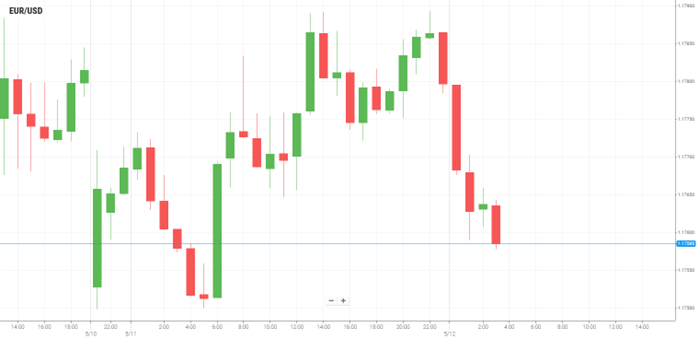
Gold prices pulled back on Tuesday after briefly reaching a three-week high during the Asian trading session, as investors turned cautious ahead of the latest US Consumer Price Index (CPI) report.
The precious metal faced pressure from a firmer US Dollar, which gained support amid rising geopolitical tensions in the Middle East and growing expectations that the US Federal Reserve could maintain a hawkish policy stance for longer.
Concerns over the conflict between the United States and Iran intensified after President Donald Trump rejected Tehran’s latest proposal aimed at ending the prolonged dispute surrounding Iran’s nuclear program and the Strait of Hormuz. Reports also suggested that frustration within the White House over stalled negotiations and the continued disruption in the strategic shipping route has increased speculation about a possible escalation in military action.
At the same time, markets are still pricing in the possibility that the Federal Reserve could deliver another interest rate increase before the end of the year, particularly if energy-driven inflation accelerates further. Higher interest rate expectations tend to weigh on non-yielding assets such as gold.
Investor attention is now firmly focused on the upcoming US CPI data, which could provide fresh clues on the Federal Reserve’s next policy moves and shape near-term direction for both the Dollar and bullion prices.
Oil prices moved higher in early Asian trading on Tuesday as uncertainty surrounding negotiations between the United States and Iran continued to raise concerns about global energy supplies.
Market sentiment remained supported after US President Donald Trump said the ceasefire with Iran was effectively “on life support,” citing major disagreements between the two sides.
Iran also reiterated its control over the Strait of Hormuz, a critical shipping route responsible for roughly 20% of global oil and liquefied natural gas flows. Ongoing disruptions and restrictions around the strait have heightened fears of tighter global supply conditions.
Supply concerns have already impacted production levels. A Reuters survey indicated that OPEC oil output in April fell to its lowest level in more than two decades, partly due to disruptions linked to restricted shipping activity in the region.
Meanwhile, the Trump administration announced plans to release 53.3 million barrels of crude oil from the US Strategic Petroleum Reserve (SPR) in an effort to ease pressure on energy markets.
In a separate development, Washington imposed sanctions on several individuals and companies accused of facilitating Iranian oil exports to China, including firms based in Hong Kong, the United Arab Emirates, and Oman.
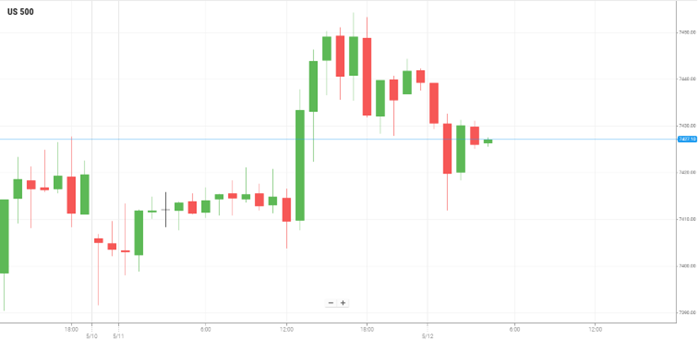
US stocks ended modestly higher on Monday, supported mainly by gains in semiconductor shares, although broader market momentum remained cautious amid renewed tensions between Washington and Tehran and ahead of key US inflation data later this week.
Technology and chip-related stocks once again led the market higher, with investors continuing to favor artificial intelligence-linked companies and semiconductor firms. However, that broader participation in the rally remained uneven, with gains concentrated in a relatively narrow group of large-cap technology names.
Investor sentiment was restrained by growing uncertainty surrounding the ongoing conflict between the United States and Iran. The diplomatic setback raised concerns over further disruption to global energy markets, particularly around the Strait of Hormuz, a key shipping route responsible for roughly one-fifth of global oil and gas flows.
Markets are now closely watching upcoming US inflation reports, including the Consumer Price Index (CPI) and Producer Price Index (PPI), which are expected to provide important signals on the Federal Reserve’s policy outlook.
Investors will also be monitoring President Trump’s upcoming visit to China later this week, where discussions with Chinese President Xi Jinping are expected to include the ongoing Iran conflict and broader geopolitical issues.
On the corporate front, upcoming earnings reports from major companies including Alibaba Group, Cisco Systems, and Applied Materials are expected to remain in focus.
The materials contained on this document should not in any way be construed, either explicitly or implicitly, directly or indirectly, as investment advice, recommendation or suggestion of an investment strategy with respect to a financial instrument, in any manner whatsoever. Any indication of past performance or simulated past performance included in this document is not a reliable indicator of future results. For the full disclaimer click here.
 Trusted partner
 Featured partner
 By
By 


