








CFDs are complex instruments and come with a high risk of losing money rapidly due to leverage. 80% of retail investor accounts lose money when trading CFDs with this provider.
You should consider whether you understand how CFDs work and whether you can afford to take the high risk of losing your money. Read More
Take advantage of ETF trading in the form of CFDs
ETFs (Exchange Trade Funds) are tradable instruments that track a commodity, an index, bonds, or a basket of assets. Through ETF trading, traders have the opportunity to expose their portfolio to a specific market or industry. There are many different types of ETFs and they are very popular among traders worldwide.
Unlike traditional mutual funds that price once a day after the market closes, ETFs are traded on stock exchanges and can be bought and sold throughout the trading day at market prices.
Trading ETFs as CFDs :
Beyond broad-market ETFs, there are many that focus on specific niches or themes, such as clean energy, technology sectors, or specific geographic regions.
Most traded ETFs among active traders
S&P 500 ETF (SPY) – Tracks the performance of the U.S. equity market’s largest companies. Highly liquid and closely tied to macroeconomic data and earnings cycles.
NASDAQ 100 ETF (QQQ) – Focused on technology and growth stocks, offering higher volatility and strong reactions to interest rate expectations.
Gold ETFs – Provide exposure to gold price movements without holding physical metal, often reacting to inflation data and risk sentiment.
Energy & Sector ETFs – Track specific industries such as energy, financials, or clean technology, driven by sector-specific news and policy changes.
These ETFs are widely traded because they combine liquidity, diversification, and transparency — making them suitable for active CFD trading with defined risk controls.
Step 1: Open an iFOREX Europe account
Step 2: Make a deposit or start with a demo
Step 3: Choose an ETF CFD
Step 4: Decide to Buy (rise) or Sell (fall)
Step 5: Set stop-loss and take-profit levels
Regulation supports transparency, fund protection, and responsible trading conditions.
ETF trading efficiency depends on competitive spreads and clear pricing.
ETF prices respond to macro data, sector news, and sentiment — access to insights matters.
Fast-moving markets benefit from reliable, human assistance when needed.
Stop-loss tools, margin controls, and alerts help keep exposure under control.
ETF CFD trading follows a transparent pricing structure:

The difference between buy and sell prices. Competitive spreads are important for active ETF traders.

If a position remains open overnight, a financing adjustment may apply.

ETF CFD trades on the iFOREX platform do not include additional trading commissions.
Understanding these costs helps you plan positions more accurately and manage risk responsibly.
Access a wide range of assets or sectors without needing to trade each one individually.
Take advantage of market movements by opening buy or sell positions depending on the direction.
Trade ETFs tied to global indices, commodities, sectors, or regions.
Customize your exposure to align with your strategy and risk preferences.
Small market movements can have a large impact on leveraged positions, increasing both potential profits and risks.
Economic indicators, policy changes, and industry events can cause significant price fluctuations.
Certain ETFs may have overlapping exposure, increasing risk if positions move in the same direction.
Holding positions overnight could incur additional costs.

Dedicated account assistance in your language.

Knowledge for traders of all levels.

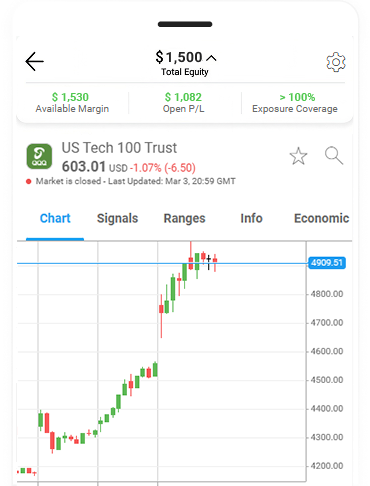
Utilize charts, signals, sentiment indicators, and macroeconomic insights for better decision-making.
An Exchange-Traded Fund (ETF) is a type of investment fund that holds a collection of assets, such as stocks, bonds, or commodities. It trades on an exchange like a stock, providing investors with a diversified portfolio in a single trade.
ETFs are designed to track the performance of an index, sector, or commodity. They are bought and sold on stock exchanges throughout the trading day, allowing investors to gain exposure to a variety of assets without purchasing them individually.
Diversification: ETFs offer access to a wide range of assets or sectors in one trade.
Liquidity: They trade like stock CFDs, providing easy entry and exit.
Flexibility: You can trade ETF CFDs long or short, and use leverage if available.
Market Risk: ETFs can be affected by market volatility and economic news.
Leverage Risk: Leveraged ETFs can amplify both gains and losses.
Sector Risk: ETFs targeting specific sectors or regions may experience volatility if those markets underperform.
Yes, many brokers, including iFOREX, offer leveraged ETF trading, allowing you to control a larger position with less capital. However, leverage increases both potential gains and losses, so it’s important to manage risk.
You can trade a wide variety of ETFs, including:
Consider factors like: