


CFDs are complex instruments and come with a high risk of losing money rapidly due to leverage. 80% of retail investor accounts lose money when trading CFDs with this provider.
You should consider whether you understand how CFDs work and whether you can afford to take the high risk of losing your money. Read More
Stay informed on market movements and explore potential opportunities as they develop.
Powered by Trading Central.
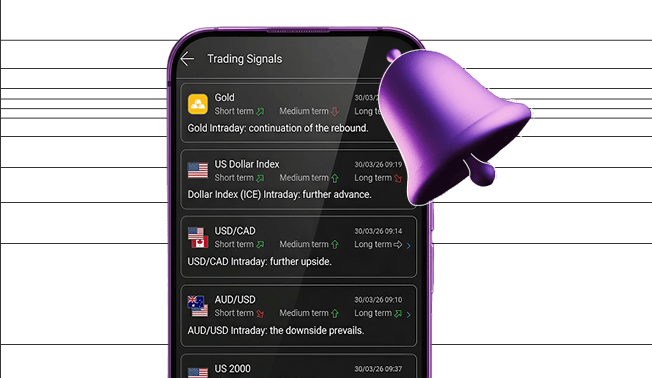


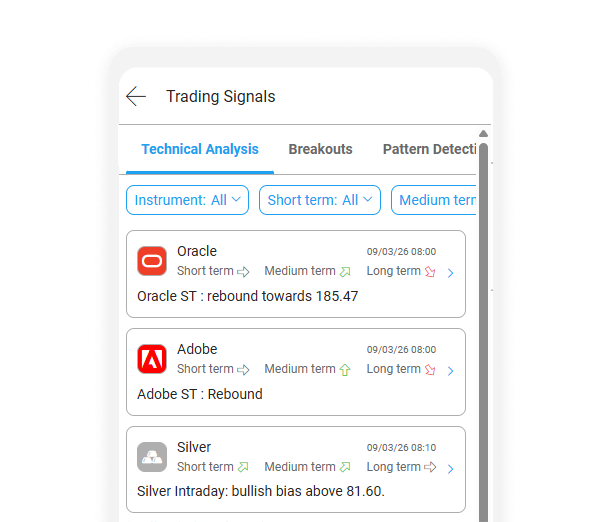
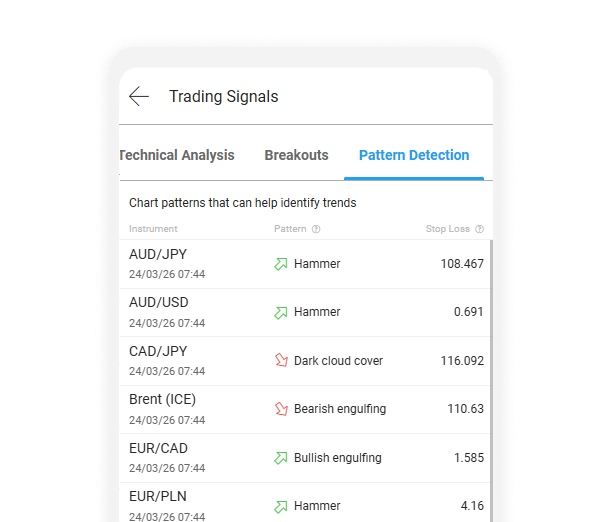
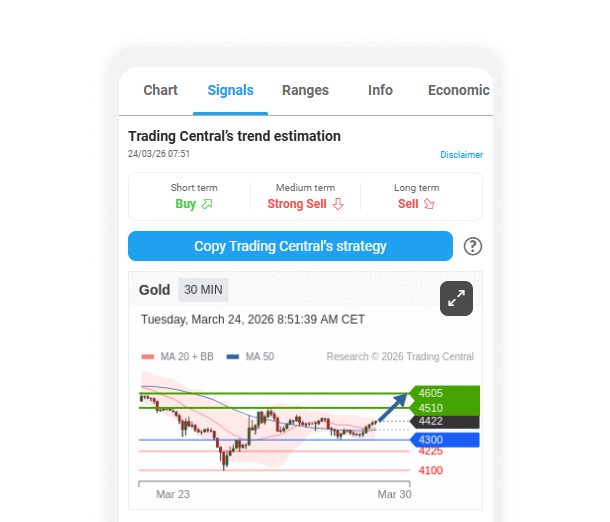
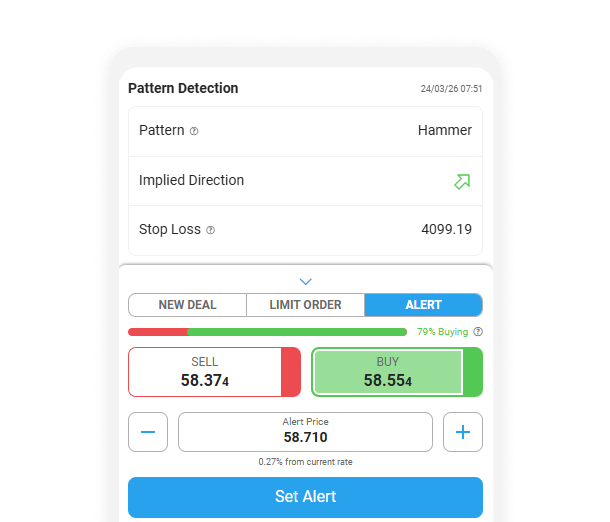
Trading signals are tools that highlight potential trading opportunities based on market data and analysis. They can help traders identify possible entry and exit points across different financial instruments.
iFOREX Europe signals are provided by Trading Central, a leading third party signal provider, and should not be considered in any way as a recommendation for a specific trading strategy in relation to specific instruments.
Types of Trading Signals
Short-term signals: Focused on intraday movements or short-term market fluctuations.
Medium-term signals: Often used for swing trading over several days or weeks.
Long-term signals: Designed for broader market trends that may develop over longer periods.
Before using any signal, it’s important to know how it is generated and whether it aligns with your approach.
Combining signals with additional indicators or analysis may help provide more context.
Always take into account broader factors such as economic news, volatility, and sentiment.
Practice using signals on a demo account or review past performance before applying them in live trading.
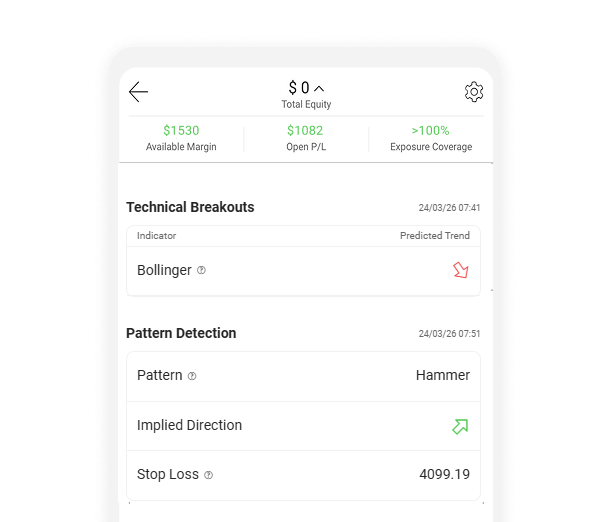
Use tools such as stop loss and position sizing to help manage potential downside.

Trade with leverage depending on the instrument, while understanding the associated risks.

Explore a wide range of instruments across multiple asset classes.

Use charts, indicators, and integrated insights to support your trading decisions.

Apply stop loss and take profit tools to help manage exposure.
Trading signals are indications of potential market opportunities, suggesting when a trader might consider entering or exiting a position.
They can be generated through technical indicators, market analysis, automated algorithms, or signal providers, each using different methods to interpret market data.
They can help simplify market discovery, but should be used alongside education and risk management practices.
No. Market conditions can change quickly, and signals do not guarantee outcomes.
No. Signals are most effective when combined with your own analysis and understanding of the market.
Signals can differ by timeframe and market, including forex, shares, commodities, and cryptocurrencies.
You can use demo accounts or backtesting to evaluate how signals perform before applying them in live trading.
Look for transparency, performance history, user feedback, and whether the provider offers educational support.
Yes. Many traders develop their own signals using technical tools, research, and experience.
Avoid over-reliance, using too many signals at once, ignoring timeframes, emotional decisions, and neglecting risk management.